AI SNAP Agents Web Memory Reasoning Teams Enterprise About
Deep Search for trusted research

Reasoning Search

SNAP turns the material you choose to save - pages, screenshots, PDFs, decks, and uploaded files - into a research workspace that can reason across your own trusted sources.

Instead of searching the open internet again, you ask questions against the sources you have already verified, captured, and organized. The result is search that understands context, not just keywords.

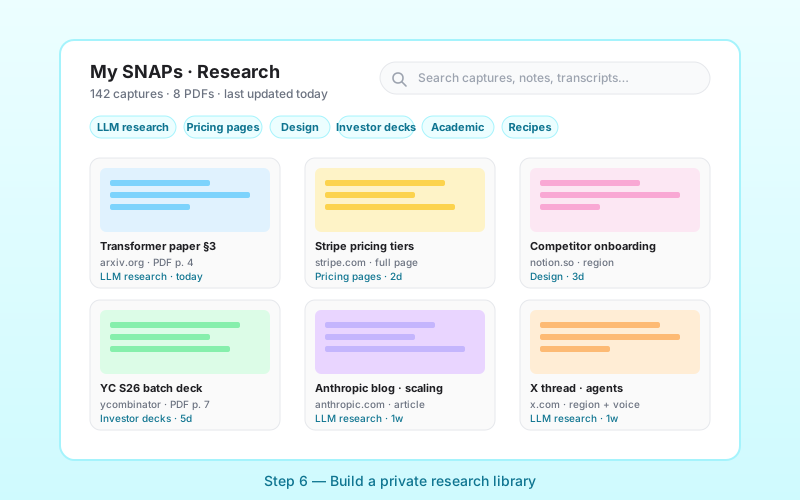
AI SNAP research library showing saved sources organized by topic
Every saved source can become part of a private research memory: summarized, organized, searchable, and ready for cited answers.

Grounded

Answers from sources you trust

SNAP is designed to answer from the material you captured or uploaded, not from random articles that happen to rank well online. That source boundary helps address one of AI's biggest transparency problems: knowing what an answer is based on.

Contextual

Beyond keyword matching

Research questions are rarely exact-match searches. Reasoning Search connects meaning, themes, summaries, and source context.

Conversational

Ask in plain English

Research becomes a conversation. Ask follow-up questions, refine your angle, and let SNAP bring the most relevant source material back into view.

How Deep Search makes SNAP a research tool

1

Your SNAPs and files are analyzed

An advanced AI model reviews captured pages, screenshots, PDFs, and uploads to produce useful summaries, topics, and signals for later research.

2

Your material is intelligently organized

SNAP builds a structured memory of what each source is about, so important documents can be found by meaning, theme, and relationship.

3

Questions trigger reasoning, not just lookup

When you ask a question, SNAP looks for the most relevant source material and uses a reasoning model to connect the right evidence to your inquiry.

4

Answers stay tied to your evidence

The chat experience is built around grounded answers and source context, so users can trace conclusions back to the documents they chose to keep.

The two research problems SNAP addresses

Most search tools are optimized for discovery. Research teams also need trust, recall, and reasoning over known material.

1. Verified source boundaries

SNAP focuses on the library you build. That means the system works from your selected sources instead of treating the entire internet as equally reliable, giving teams a clearer line from answer to evidence.

2. Meaning over keywords

By combining analysis, organization, and reasoning-based retrieval, SNAP can surface relevant documents even when your question does not use the same words as the source.

This approach follows Silverberry's Responsible AI by Design framework: build AI experiences that are useful, explainable, and grounded in the context users can inspect.

Who it is for

Academic research

Collect papers, articles, citations, lecture material, and notes, then ask grounded questions across the body of work.

Education

Turn readings, course resources, screenshots, and uploaded documents into a searchable study memory that supports learning and synthesis.

Corporate intelligence

Capture market signals, competitor pages, reports, customer evidence, and trend material for analysis, forecasting, and executive briefs.

Search should reason over what you trust.

SNAP helps teams turn saved information into research-grade memory: organized, source-grounded, and ready for decision work.

Start with SNAP